
accident Wrap Protection Film
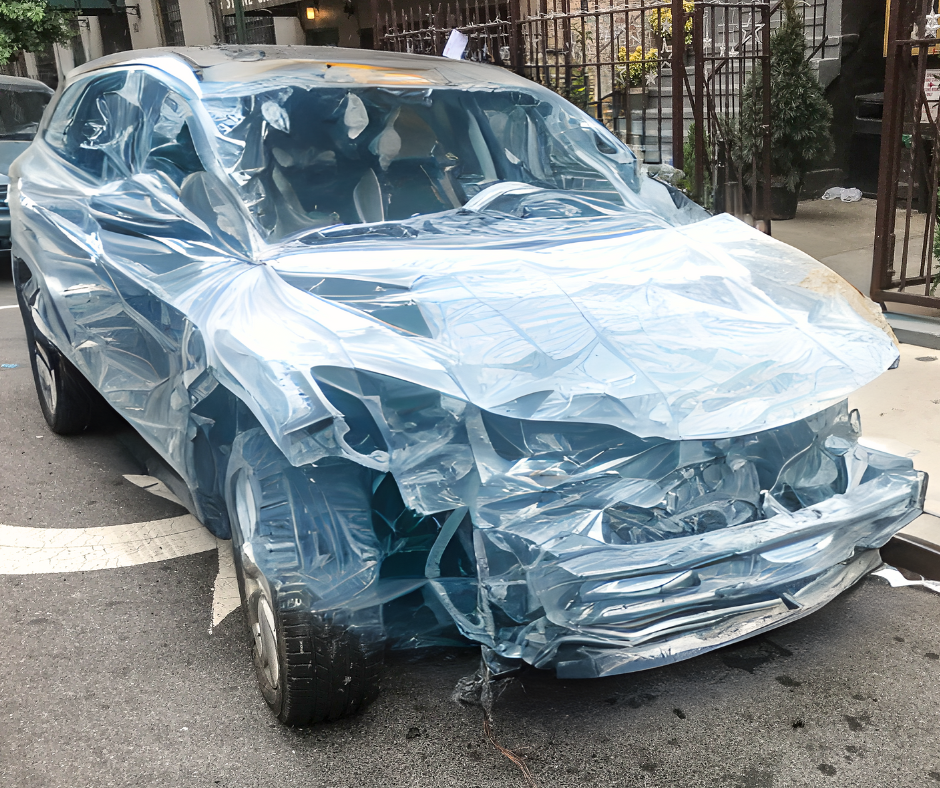
Safely transport wrecked vehicles
- Designed to keep car parts in place during towing or damaged openings protected from elements
- Materials: Polyethylene Film coated with a water-based acrylic adhesive
- Solvent-Free sustainable adhesive
- Available colors: Blue or Clear
PRODUCT DETAILS
Presto Tapes Accident Wrap is a high-tack protective film ideal for use after an accident or when a car has been damaged, for safe transportation to keep parts in place and sealed together. Towing companies and auto body shops can use Accident Wrap to secure parts from totaled vehicles during towing to an auto body repair shop or salvage yard. Accident Wrap can also be used to protect cracked windshields, broken windows, sprung doors, and exposed car interiors from rain, wind, dirt, snow, or over-spray. Each roll is continuous with adhesive on one side and will seal any openings on a vehicle.
Accident Wrap Specifications
Roll Size: All films are available in custom sizes up to 60″ width and up to 5,000′ finished
Perforations: Custom perforations as well as standard perforations of 2″, 3″, 4″, 6″, 7″, 8″, 12″, 21″, 24″.
40L77
- Adhesion to Steel: PSTC-101 (oz/in): 11.0 to 14.0
- Tack Level: High
- Elongation (%): PSTC-131: 325
- Thickness: PSTC-133: 3.2 mils (nominal)
40L90
- Adhesion to Steel: PSTC-101 (oz/in): 19.0 to 22.0
- Tack Level: Maximum High Tack
- Elongation (%): PSTC-131: 325
- Thickness: PSTC-133: 3.5 mils (nominal)
- 40L77 – High Tack Accident Wrap 24” x 200’ 180 Rolls
- 40L77 – High Tack Accident Wrap 36” x 100’ 90 Rolls
- 40L77 – High Tack Accident Wrap 36” x 200’ 90 Rolls
- 40L77 – High Tack Accident Wrap 48” x 200’ 90 Rolls
- 40L77 – High Tack Accident Wrap 60” x 200’ 90 Rolls
- 40L90 – Extra High Tack Accident Wrap 24” x 200’ 180 Rolls
- 40L90 – Extra High Tack Accident Wrap 36” x 100’ 90 Rolls
- 40L90 – Extra High Tack Accident Wrap 36” x 200’ 90 Rolls
- 40L90 – Extra High Tack Accident Wrap 48” x 200’ 90 Rolls
- 40L90 – Extra High Tack Accident Wrap 60” x 200’ 90 Rolls
We're Here to help
Our team is available to help with product questions, find the right solution for your business, or provide a quote. Contact us to get started.
BENEFITS
Benefits of Presto Tape's Accident Wrap
Tow Driver Safety
Accident wrap contains loose parts, shattered glass, and interior debris, preventing items from falling off during transport and creating road hazards or traffic violations.
Simplifies Storage
Wrapped vehicles stay sealed from weather exposure and pest intrusion, reducing mess and safety issues in storage areas.
Supports Compliance
Using accident wrap adheres to industry best practices, reassuring insurance partners and allows for responsible transportation.
PROCESS USE
Accident Wrap is engineered to secure and protect vehicles that have been damaged in collisions, providing a fast, reliable temporary barrier over broken windshields, shattered windows, open sunroofs, and exposed interior areas. The film shields vehicle interiors from weather, rain, road debris, and contamination during towing and storage, preventing further damage to upholstery, electronics, and structural components. Designed to hold firmly at highway towing speeds and stay securely in place. It also contains broken glass, loose trim, and damaged parts from separating from the vehicle during transportation and creating hazards for other vehicles on the road.
The film can be used for specific applications, including:
Open Exposure Coverage
Accident wrap seals any exposed opening quickly and securely, keeping rain, wind, dirt, and debris out of the vehicle and away from interior components.
Towing Security
Unlike tarps, accident wrap is engineered to maintain adhesion at highway speeds. The film resists wind uplift and flutter during flatbed or hook-and-chain towing, ensuring the protective barrier stays intact throughout the full transport without shifting, peeling, or failing mid-route.
Debris Containment
Collision damage often leaves broken glass, cracked panels, and loosened parts compromised. Accident wrap securely keeps these parts in place, preventing fragments from separating during transport and becoming road hazards for the tow driver and other drivers on the road.
APPLICATION USE
The film is suitable for a range of applications.
Shattered or Cracked Glass
Adheres securely to broken windows and glass to prevent rain, snow, and debris from entering the interior. Ideal for towing or lot storage when windows are broken or missing.
Vehicle Panels
Can be applied over damaged hoods, doors, trunks, or roofs where panels no longer close properly. Creates a tight seal that stays secure during highway transport to keep parts in place
Torn or Exposed Parts
For vehicles with collision-related rips, bends, or missing panels, accident wrap helps cover and contain sharp or jagged areas.
Rubber Weather Seals
Applies directly over compromised rubber seals where doors or windows cannot close fully. Keeps wind and moisture out during towing and storage.
Wrecked Vehicles
Designed for use on severely damaged or totaled vehicles to keep secure loose parts and protect interiors during towing or storage.
HOW TO APPLY & REMOVE PROTECTIVE FILM
Applying the Film
1. Inspect the vehicle: Walk around the vehicle and identify all damage, broken glass, sprung doors, loose panels, compromised hoods or trunks, and any parts at risk of separating during transport.
2. Clear the surface: Remove large debris or loose fragments from areas where the film will be applied.
3. Seal openings first: Cover broken windows, windshields, sunroofs, and any open cavities first, pressing the film firmly into frame edges to create a weather-tight seal.
4. Anchor the starting edge: Position the roll adhesive-side down at one edge of the area to be wrapped and press firmly to anchor before unrolling.
5. Roll out the film: Unroll slowly across the surface, applying firm pressure as you go to ensure a strong bond.
6. Wrap loose or compromised parts: Extend the film over sprung doors, damaged panels, or anything at risk of detaching during towing. If needed, fully wrap the vehicle to keep all parts in place.
7. Overlap as needed: If covering large areas, overlap each layer by several inches to maintain a continuous, secure barrier.
8. Cut and seal edges: Once the area is fully covered, cut the film cleanly and press all edges and seams down firmly.
9. Do a final walk-around: Check the entire vehicle for any loose sections that could lift or fail at highway towing speeds.
Removing the Film
1. Inspect before removing: Assess the vehicle’s condition before pulling any film. Identify areas where the wrap may be holding loose parts, glass, or damaged panels in place and plan your removal accordingly.
2. Coordinate with repair or salvage: If the vehicle is going directly into repair or dismantling, confirm with the receiving facility before removing wrap, it may be better left in place until they’re ready to work on that area.
3. Support loose parts first: Before peeling film away from any area containing loose or compromised parts, have someone support those parts by hand or use an alternative restraint to prevent them from shifting or falling.
4. Lift an edge carefully: Use a plastic scraper to pry up a corner of the film, staying mindful of sharp glass or jagged metal underneath.
5. Peel slowly at a low angle: Pull the film back gradually with steady, even pressure. The high-tack adhesive is not designed for clean release. Slow and controlled is better than fast.
6. Work in sections: Remove large areas in manageable sections rather than trying to pull everything at once, especially where multiple overlapping layers were applied.
7. Dispose properly: Roll used film onto itself, adhesive-side in to contain debris.
INDUSTRIES USING ACCIDENT WRAP
Collision Repair & Auto Body Shops
Keep broken windows or damaged vehicles safe from water intrusion, debris, and further damage while the car is exposed to the elements.
Towing and Recovery Services
Secure broken parts in place for the safety of the vehicle, the towing company, and others on the road.