
CABINETRY PROTECTION PAPER
Protect Cabinetry and Woodworking Projects Before Use
- Designed to temporarily protect surfaces like cabinetry and carpentry projects
- Removes clean, without leaving any residue behind
- Materials: Saturated natural color paper
- Low tack adhesive
PRODUCT DETAILS
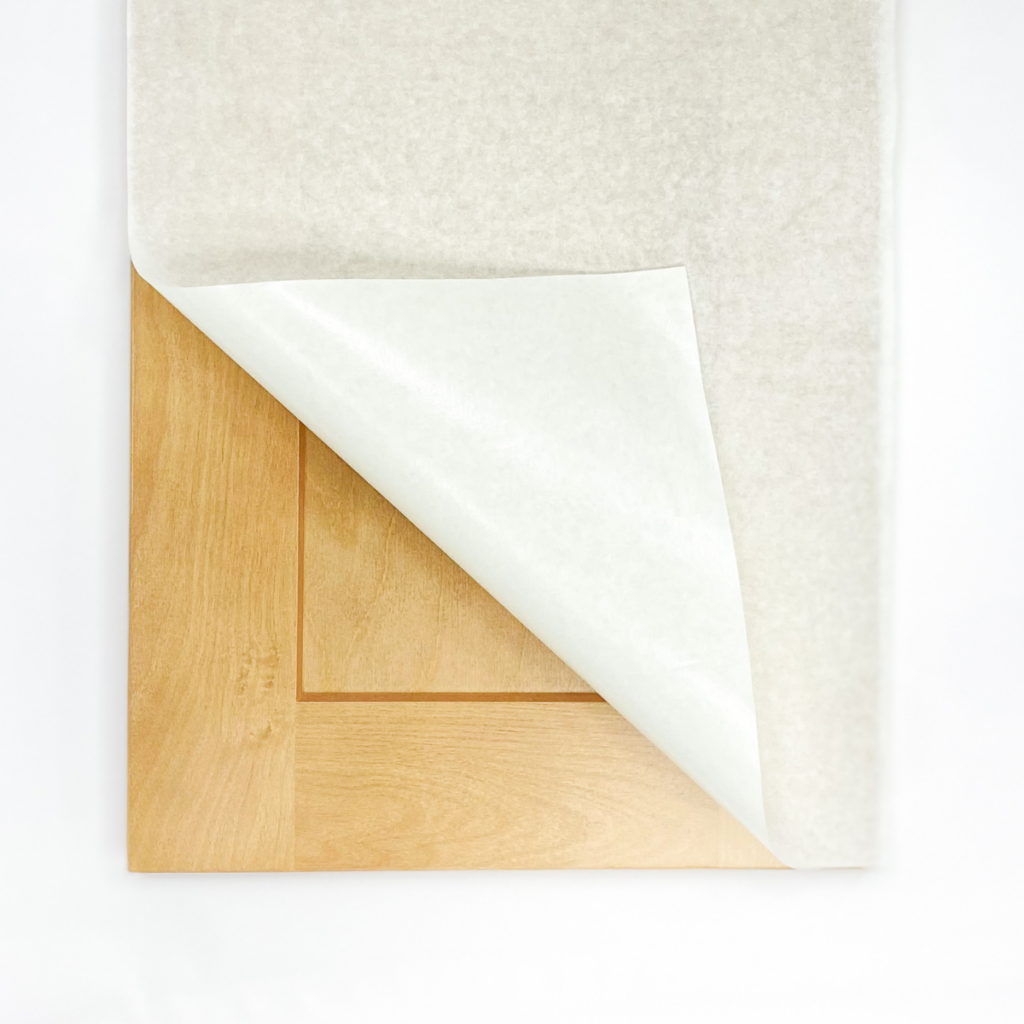
Presto Tapes Cabinetry Protection Paper keeps woodworking projects free of damage. The low-tack adhesive-backed paper is ideal for fabricating, safely storing, transporting, delivering, and installing carpentry projects, woodwork, or cabinetry. Our Surface Protection Paper is made with natural white colored paper. Cabinet Protection Paper is easy to install and keep in place for the duration of use.
Cabinet Protection Paper Specifications
Roll Size: Available in custom sizes up to 60″ width and up to 5,000′ finished
Perforations: Custom perforations as well as standard perforations of 2″, 3″, 4″, 6″, 7″, 8″, 12″, 21″, 24″.
7169
- Adhesion: Extra Low
- Tack Level: Extra Low
- Tensile Strength: (lb/in.): 20
- Elongation (%): PSTC-31: 3-4
- Thickness: PSTC-33: 3.5 to 4.0 mils (nominal)
Standard Size Options
- 7169 Extra Low Tack Paper 48″ x 100 Yard 49 Rolls
- 7169 Extra Low Tack Paper 54″ x 100 Yard 49 Rolls
- 7169 Extra Low Tack Paper 60″ x 100 Yard 49 Rolls
We're Here to help
Our team is available to help with product questions, find the right solution for your business, or provide a quote. Contact us to get started.
BENEFITS
Benefits of Presto Tape's Cabinet Protection Film
MINIMIZES MARRING
Maintains the look of matte, gloss, or woodgrain patterns during production and assembly.
ENHANCES DELIVERY QUALITY
Delivers fully assembled or flat-packed cabinetry with zero cosmetic damage, reducing returns.
Guaranteed Quality
Guards cabinet faces and edges from dust, overspray, adhesive splatter, and foot traffic during fabrication and installation.
PROCESS USE
Cabinet Protection Paper shields finished surfaces at every stage, from fabrication and finishing through assembly, installation, transport, and storage. It guards against tools, abrasion, scuffs, chips, and contamination without leaving residue behind. During renovations and construction, the paper can be applied to stay in place and protect until the updates are complete.
The protective paper can be applied for specific uses, including:
Inter Stage Handling Protection
Serves as a barrier when parts move between cutting, routing, sanding, and assembly, protecting the cabinet surface from tool marks, sawdust, or splintering.
Safe Stacking & Nesting
Allows cabinetry to be stacked without risk of damage to the newly fabricated component.
Packaging & Storage Protection
Keeps cabinet surfaces pristine during storage before shipping, preventing dust, fingerprints, or surface blemishes.
APPLICATION USE
The paper is suitable for a range of applications. We always recommend testing first.
Painted Wood Cabinets
Cabinets finished with durable paint, such as semi-gloss or satin sheens, adhere securely and remove cleanly without affecting the finish.
Laminated Cabinets
These cabinet surfaces are common in kitchens and bathrooms. The smooth laminate surface offers excellent adhesion with minimal risk of residue or lifting upon removal.
Veneer Cabinets
Veneer cabinets that have been sealed, varnished, or lacquered provide a compatible surface. Adhesion is reliable as long as the finish is intact and the surface is clean.
PVC or Vinyl-Wrapped
Often found in modular cabinetry, vinyl-wrapped MDF doors are non-porous and smooth, making them ideal for cabinet protection paper.
Acrylic or High-Gloss Finishes
High-sheen cabinet fronts are compatible, provided the surface is clean and free of polishing agents or waxes.
HOW TO APPLY & REMOVE PROTECTIVE PAPER
Applying the Protective Paper
1. Clean the Cabinet Surface: Before applying the cabinet protection paper, thoroughly clean all cabinet surfaces. Remove dust, dirt, grease, and debris using a mild, surface-safe cleaner. Make sure the area is completely dry for the best adhesive performance.
2. Ensure the Surface is Dry: Moisture can prevent proper adhesion. Confirm that all cabinet surfaces are fully dry before applying Presto Tape’s adhesive protection paper to achieve a secure bond.
3. Position the Roll: Place the roll of Cabinet Protection Paper at the starting edge of the cabinet, with the adhesive side facing downward. Align carefully for straight application.
4. Choose Your Application Method
By Hand: Slowly unroll the protection film across the cabinet surface, pressing it down firmly for even coverage.
With an Applicator: Load the roll into an applicator for consistent pressure and smoother results. This ensures the film adheres evenly without bubbles or wrinkles.
5. Smooth the Film During Application: As you apply the surface protection film, press it down using your hand, a soft cloth, or an applicator. This keeps the film flat and wrinkle-free, ensuring maximum protection for your cabinetry.
6. Remove Air Bubbles: To achieve a flawless finish, smooth the film from the center outward to push out any trapped air. This step ensures full contact between the adhesive film and the cabinet surface.
7. Trim the Edges: Once the roll reaches the edge of the cabinet or section, trim any excess film neatly using a utility knife or scissors. Follow the contours of cabinet doors, edges, and hardware for a clean, professional look.
Removing the Film
1. Gather Supplies: Have soft, clean cloths on hand along with a plastic or other non-marring scraper. These will help lift and remove the paper without damaging cabinet finishes.
2. Check Surface Conditions: For best results, remove the cabinet protection paper when the surface is at a moderate temperature. Extremely hot or cold conditions can make the adhesive more difficult to release.
3. Identify a Starting Point: Begin at an exposed corner or edge of the protection paper. If the edge is difficult to grasp, carefully slide a plastic scraper under a small section to start the lift. Do not use sharp tools.
4. Remove the Paper Gradually: Once an edge is raised, pull the paper back slowly while keeping it folded onto itself. Maintain a consistent angle and pace to help prevent tearing or adhesive transfer.
5. Work Across the Surface: Continue lifting the paper in sections, keeping steady tension as you move across the cabinet. If the paper resists, pause and adjust your angle rather than pulling abruptly.
6. Clean the Surface After Removal: After the paper is fully removed, wipe the cabinet with a soft cloth and a mild cleaner if needed. Dry the surface thoroughly to restore a clean, finished look.
INDUSTRIES USING PROTECTIVE CABINET PAPER
Cabinet Manufacturers
Protecting cabinet doors, drawer fronts, and panels during cutting, finishing, assembly, and shipping before final installation.
General Contractor
Keeping installed cabinetry and millwork protected from dust, debris, and trade traffic throughout the active construction phase.
Moving & Logistics Companies
Wrapping finished cabinet components and furniture panels for damage-free transport during residential and commercial moves.
Retail & Warehouse Distribution
Protecting flat-pack or pre-assembled cabinetry during storage and last-mile handling to ensure product arrives shelf-ready.