
Window Protection Film
Window Protection Film can protect against various elements
- Designed to temporarily act as a barrier to protect windows
- Use for up to 90 days
- Indoor or outdoor use
- UVI additive ensures clean removal after prolonged exposure to sunlight
- Materials: Polyethylene Film coated with a water-based acrylic adhesive
- Solvent-Free sustainable adhesive
- Available colors: Clear or Blue
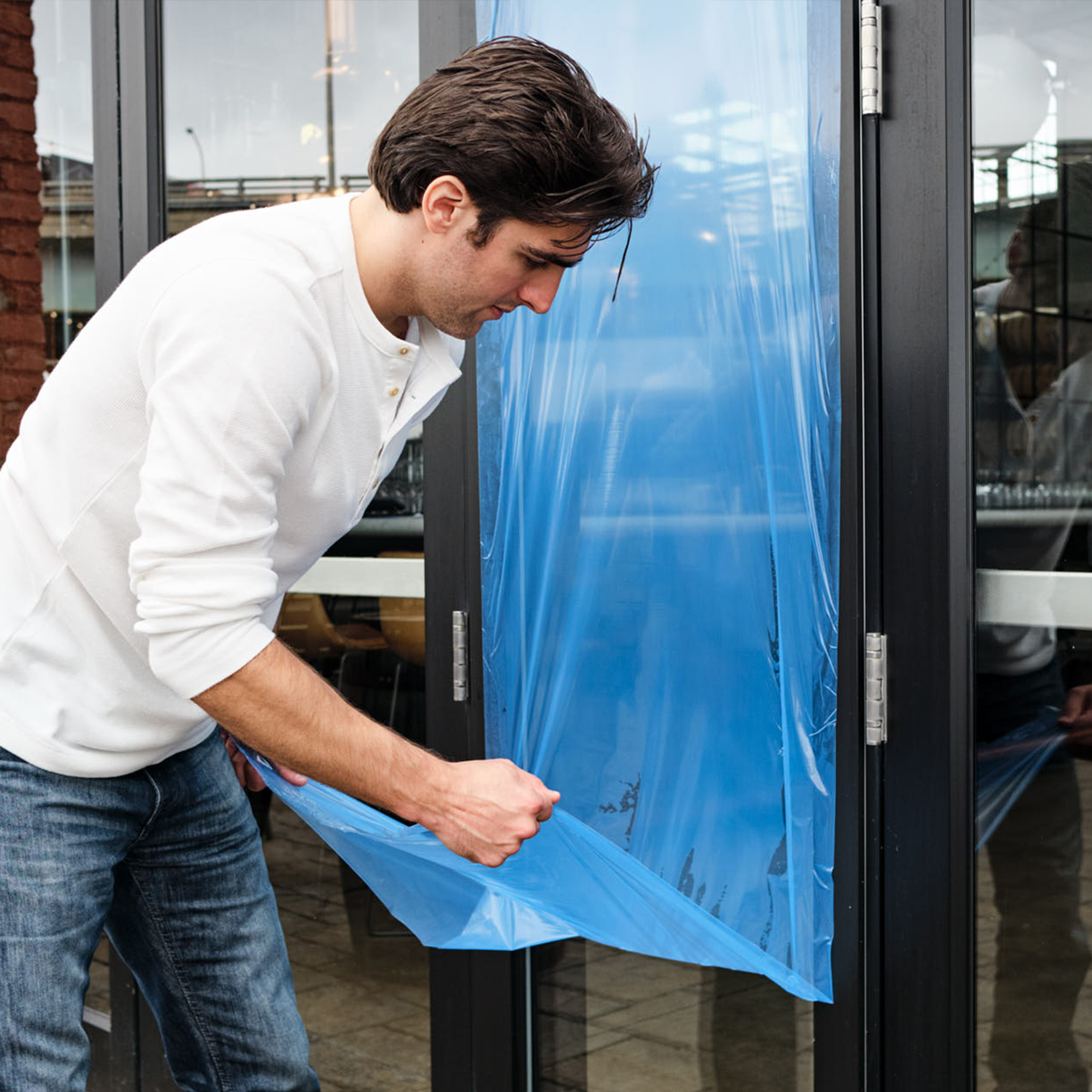
Product Details
Window protection film is designed to temporarily safeguard glass and window frames from damage, debris, and contaminants during fabrication, transportation, storage, and construction. It can also act as a barrier to protect windows from outdoor elements, damage, dirt, and building materials.
The film is ideal for manufacturing, storing, transporting, delivering, and installing windows. Window Protection Film is also designed for use during construction, renovations, interior and exterior painting, plastering, stucco, and brick acid washing.
Window Protection Film Specifications
Roll Size: All films are available in custom sizes up to 60″ width and up to 5,000′ finished
Perforations: Custom perforations as well as standard perforations of 2″, 3″, 4″, 6″, 7″, 8″, 12″, 21″, 24″.
15LUV45
- Adhesion to Steel: PSTC-101 (oz/in): 2.0 to 4.0
- Tack Level: Low
- Tensile Strength: PSTC-131 lb/sq in: 5
- Elongation (%): PSTC-131: 325
- Thickness: PSTC-133: 1.6 mils (nominal)
Standard Size Options
- 15LUV45 – Window Protection Film (21” x 600’) – 112 Rolls
- 15LUV45 – Window Protection Film (24” x 200’) – 180 Rolls
- 15LUV45 – Window Protection Film (24” x 600’) – 112 Rolls
- 15LUV45 – Window Protection Film (36” x 200’) – 90 Rolls
- 15LUV45 – Window Protection Film (36” x 600’) – 56 Rolls
- 15LUV45 – Window Protection Film (48” x 200’) – 90 Rolls
- 15LUV45 – Window Protection Film (48” x 600’) – 56 Rolls
We're Here to help
Our team is available to help with product questions, find the right solution for your business, or provide a quote. Contact us to get started.
BENEFITS
Benefits of Presto Tape's Window Protection Film
Reduced Rework
Window film protects glazing during construction, eliminating cleanup or replacement due to paint, sealants, or equipment contact, saving labor and avoiding costly delays.
Improved Product Presentation
A pristine surface beneath the film enhances unboxing for contractors and end clients, reinforcing a premium, detail-oriented brand image.
Reduces Cleanup Time & Cost
By shielding surfaces from contaminants, it significantly minimizes the need for labor-intensive cleaning, scraping, or expensive repairs and replacements.
PROCESS USE
Window Protection Film provides temporary surface protection during fabrication and finishing, guarding glass against scratches, tool marks, and other abrasions. The film also protects the surface during installation, transportation, and storage, helping prevent scuffs, chips, residue, and contamination.
During renovations and construction, Window Protection Film offers a clean, efficient way to shield glass from dust, overspray, paint splatter, masonry work, and debris, reducing cleanup time and minimizing the risk of damage.
The film can be used for specific uses during production, including:
Frame Fabrication
The film can be applied to the frame immediately after it is cut, shaped, drilled, painted, and finished. This initial application prevents scratches, scuffs, and dirt that can occur during handling, movement on conveyor belts, or stacking of frame components before assembly. For painted or finished frames, it protects the delicate surface while the coatings cure.
Rough-In and Sealing
Window installation involves applying sealants, caulks, and sometimes spray foam around the frame to create a weather-tight seal. The window protection film on the frame acts as a barrier, catching any drips, smears, or overspray from these materials. This prevents them from bonding directly to the finished frame, saving significant cleanup time and preventing potential damage to the frame’s finish.
Protection During Construction
Once windows are installed, the construction site is often still active. Trades like drywallers, painters, stucco applicators, masons, and landscapers will continue their work. The film acts as a shield against paint overspray, stucco splatter, drywall dust and mud, mortar and grout, and acid washing.
APPLICATION USE
The film is suitable for a range of applications.
Vinyl (PVC)
Common window frame materials for newer windows. Smooth, non-porous surface suitable for protection film.
Metal
Works with unfinished, painted, or anodized aluminum frames or commercial and industrial steel frames.
Wood
Suitable for finished wood. Test first on unfinished or porous surfaces.
Fiberglass
Becoming more popular. Compatible with fiberglass window frames.
Clad
Effective on exterior cladding materials that combine different materials, where the exterior is clad with a weather-resistant material.
HOW TO APPLY & REMOVE PROTECTIVE FILM
Applying the Film
1. Clean the Surface: Before any film application, individual frame profiles (e.g., cut vinyl pieces, aluminum extrusions, wood lengths) must be clean and dry. This often involves wiping away dust, oils, or any residue. A clean surface ensures proper film adhesion and prevents contaminants from being trapped beneath it.
2. Visual Inspection: A quick visual check ensures the frame material is free of defects that would be covered by the film.
3. Applying the film during Window Fabrication
- Feed the Film: Feed rolls of protection film into an automated dispenser or position them for manual application.
- Apply & Smooth: As frame profiles move along the production line, automatically or manually apply the film smoothly to the primary surfaces of the frame.
- Remove Bubbles: Use rollers or squeegees to ensure even adhesion and remove air bubbles.
- Cut to Size: Cut the film to the appropriate length for each profile section.
3. Applying Window Protection Film on a Construction Site
- Apply the Film: Start at the top of the window. Peel back a few inches of the film from the roll. Carefully align the top edge of the film with the top edge of the window.
- Adhere to the Window: Press the exposed adhesive onto the window, working your way down. As you pull down the backing, use a squeegee, clean cloth, or your hand to smooth the film onto the window surface, pushing out any air bubbles as you go. Work from the center outwards.
- Trim Excess Film: Once the film is fully applied, use a sharp utility knife to carefully trim the excess film along the edges of the window frame. A straight edge can help for cleaner cuts.
Removing the Film
1. Gather Tools: Microfiber cloths and a plastic scraper. Avoid using anything that could scratch the glass or window frame.
2. Prepare the Window: Ensure the window surface is cool to the touch. If the film has been applied to a window outside, early morning or shaded conditions are best. Extended exposure to direct sunlight can cause adhesives to become more stubborn.
3. Identify a Removable Section: Look for an edge or corner of the window film where you can begin lifting. You may need to lightly score a small section or carefully slide a plastic scraper underneath to loosen the corner.
4. Peel with Care and Control: Once an edge is free, slowly peel the film back at a gentle, steady angle between 45 and 180 degrees. Try to maintain even tension and avoid jerking or tearing.
5. Final Surface Cleaning: Wipe down the window thoroughly using a streak-free glass cleaner and a lint-free cloth to restore full clarity. Buff until the surface is clean and gleaming.
INDUSTRIES USING PROTECTIVE WINDOW FILM
Construction
Window Protection Film shields windows against paint, overspray, construction debris, dust, accidental scratches, and impacts from tools. The film also protects against corrosive materials used in acid washing brick masonry work.
Window Manufacturers
Window Protection Film can be used in window manufacturing protecting from scratches, scuffs, dust, and handling damage during assembly, warehousing, and transportation.
Property Management & Real Estate
Used during apartment turnovers, routine maintenance, or building updates to protect windows from paint, cleaning chemicals, and minor damage, especially in multi-unit properties.